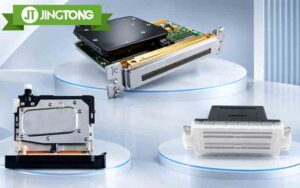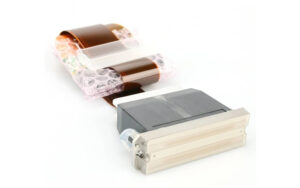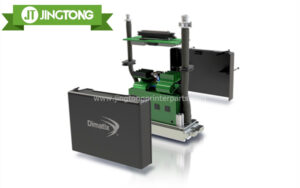
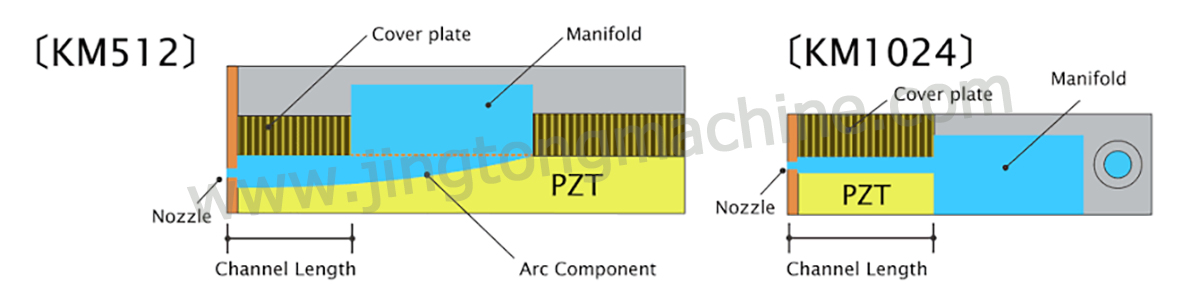
Konica Minolta printhead comparison is an important step when selecting a printhead for industrial inkjet equipment. The KM512i, KM1024i and HS1000 differ in nozzle configuration, drive architecture and integration requirements. Understanding these differences helps printer manufacturers and service providers identify a suitable platform for their production needs.
1. Overview of the Three Printhead Series
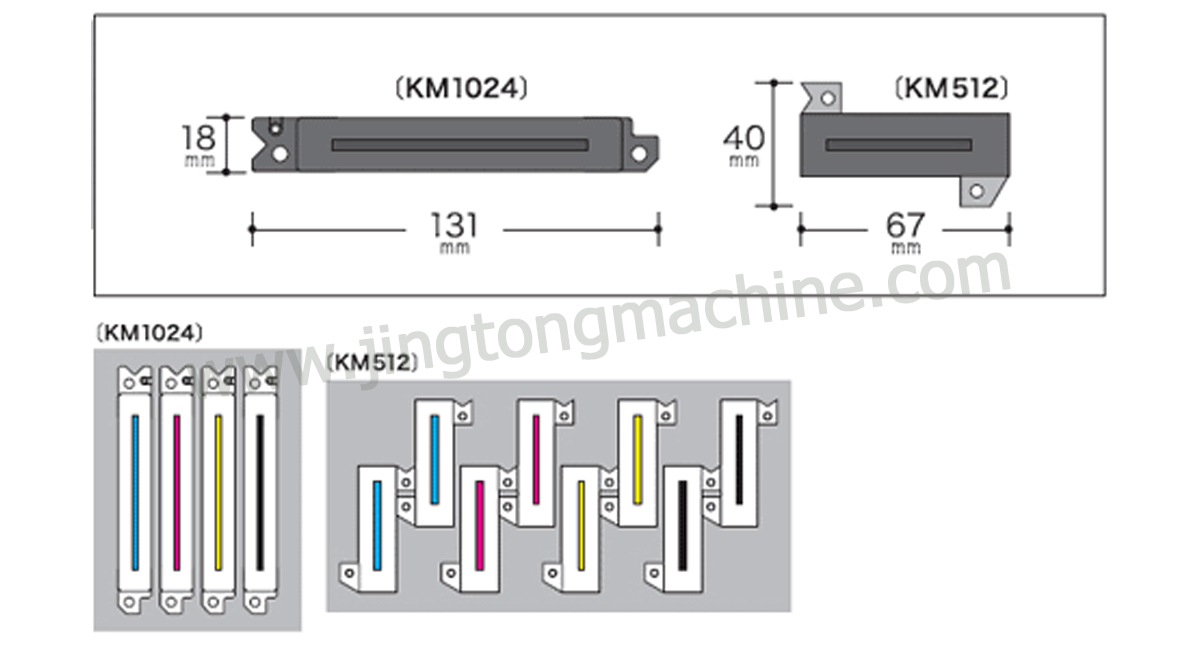
● KM512i: A 512-nozzle platform found in existing industrial systems and selected cost-sensitive applications.
● KM1024i: A 1,024-nozzle platform used in a range of industrial printing configurations.
● HS1000: A separate high-speed platform intended for specialized industrial integration.
The best choice depends on the target application, required output and compatibility with the printer’s control and ink systems.
2. Key Specification Comparison
The reference article lists the following values. Specifications may vary by exact model and variant, so verify them against the relevant manufacturer documentation before purchase.
| Specification | KM512i | KM1024i | HS1000 |
|---|---|---|---|
| Nozzle count | 512 | 1,024 | 1,024 |
| Listed resolution | 180–360 dpi | 360 npi | 360 npi |
| Listed droplet size | 13–30 pL | 6, 13, 30 pL | 30 pL |
| Listed maximum frequency | Approximately 27–30 kHz | Up to 56 kHz | Approximately 27 kHz |
| Listed print width | Approximately 72 mm | 72 mm | 72 mm |
| Drive architecture | Model-dependent | Sequential multi-cycle | Independent all-nozzle control |
These figures should not be treated as a direct prediction of print speed or image quality. Actual performance depends on operating conditions, electronics, waveform settings and the complete printer design.
3. KM512i: Maintaining Existing Equipment
The KM512i may be a practical choice when maintaining an existing printer designed around this platform. Its 512-nozzle configuration and established integration may suit equipment where replacing the entire printing system is not economically justified.
Before ordering a replacement, confirm the exact variant, ink compatibility and drive requirements. A printhead with the same family name may still differ in electrical or fluidic specifications.
4. KM1024i: Flexible Industrial Printing
The KM1024i family includes variants with different droplet characteristics. The reference guide identifies SHE, MHE and LHE variants associated with different nominal droplet sizes.
Depending on the configuration, KM1024i printheads may be used in label, packaging, textile and other industrial printing systems. The specific variant must match the intended ink and printer architecture.
5. HS1000: High-Speed System Integration
The HS1000 should be evaluated as a distinct platform rather than assumed to be a direct substitute for every KM1024i model. Differences in drive architecture, signal control and electrical interfaces can affect integration.
For single-pass applications, system-level factors such as printhead arrangement, media transport, ink delivery and control electronics are just as important as the head’s individual specifications.
6. Ink Compatibility and Integration
Before choosing a Konica Minolta printhead, verify:
● Ink chemistry and formulation.
● Required viscosity and temperature range.
● Filtration and ink delivery requirements.
● Drive electronics and waveform support.
● Mechanical mounting and alignment.
● Availability of compatible replacement parts.
Do not assume that all variants support every aqueous, solvent, oil-based or UV-curable ink. Confirm compatibility for the exact head and ink formulation.
Conclusion
The KM512i, KM1024i and HS1000 address different industrial printing requirements. Comparing their specifications is a useful starting point, but successful selection depends on ink compatibility, drive architecture and the requirements of the complete printing system.