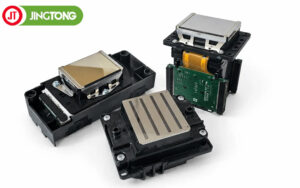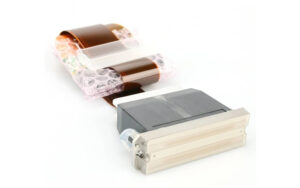
The Epson S3200 vs 4720 printhead comparison is important for businesses choosing a printhead configuration for digital textile and thermal transfer printing. Both solutions have been used in production equipment, but they differ in physical design, effective printing width, integration requirements, and investment costs. The right choice depends on production volume, image quality requirements, and the overall printer configuration.

Key Differences Between S3200 and 4720
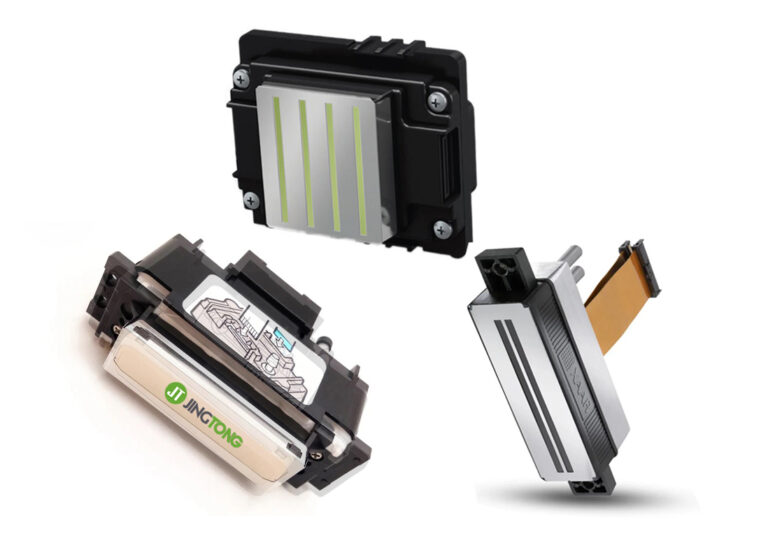
The Epson S3200 is an industrial PrecisionCore MicroTFP printhead with an effective print width of approximately 120.2 mm (4.73 inches). The 4720, commonly associated with adapted printheads from desktop printer platforms, has a much narrower effective width of approximately 33.8 mm (1.33 inches).
Although both are often described as having 3,200 nozzles, nozzle count alone does not determine productivity. Print width, nozzle arrangement, driving frequency, droplet size, and the number of installed heads all influence the performance of the complete printing system.
The S3200 is designed for industrial production and supports different ink variants. The 4720 solution may have a lower initial investment, but its specifications, condition, and integration support should be checked carefully.
Printing Speed and Production Efficiency
A wider effective print area can reduce the number of printheads or passes required for a particular machine design. This is one reason the S3200 is considered for high-volume industrial textile printing.
However, actual production speed depends on more than the printhead. Pass count, carriage movement, print resolution, ink delivery, drying or curing capacity, and the stability of the control system all affect throughput.
A multi-head 4720 configuration may achieve competitive speeds in certain production settings. Likewise, an S3200 system will not automatically be faster if the machine’s ink supply, waveform, or motion control cannot support the intended operating conditions.
Single-pass printing can offer higher throughput, but it requires precise head alignment, consistent droplet ejection, and suitable ink-system performance. A solution should be evaluated using real production samples and measured output rather than headline speed alone.
Printing Accuracy and Image Quality
Both printhead solutions can produce detailed images when correctly configured. The final result depends on nozzle performance, ink characteristics, printhead alignment, waveform settings, and the printer’s RIP software.
The S3200’s wider print area can simplify certain industrial head arrangements. Its nozzle layout and multi-level droplet control also support applications requiring fine details and smooth tonal transitions. However, alignment and overlap still need to be engineered carefully.
A 4720-based system can also deliver good print quality when its heads are properly aligned and maintained. Differences between individual machines may be more significant than the printhead model alone, so compare actual test prints at equivalent resolution and production settings.
Comparing the Overall Solution Cost
The initial printhead price is only one part of the investment. A system using multiple 4720 heads may have a lower entry cost, while an S3200 configuration may require a larger upfront budget and a different industrial ink delivery system.
The total cost should include the printheads, control electronics, ink supply, installation, maintenance, consumables, and production downtime. Printhead lifespan and replacement frequency also influence long-term operating expenses.
Rather than relying on a fixed price ratio, estimate the cost per square meter or per finished product using realistic production volume, maintenance requirements, and replacement assumptions.
Which Printhead Is Better for Thermal Transfer Printing?
The 4720 solution may suit businesses prioritizing a lower initial investment or operating existing equipment built around that platform. Before purchasing replacement heads, verify their origin, condition, and compatibility with the machine.
The S3200 may be worth evaluating for industrial users who need a wider effective print area, higher production capacity, and an industrial-grade integration platform. Confirm the exact ink variant, supported waveform, and printer design before making a decision.
Conclusion
The Epson S3200 vs 4720 comparison should focus on the complete printing solution rather than nozzle count or printhead price alone. Evaluate effective print width, production speed, image quality, reliability, and total operating cost to identify the configuration that best matches your thermal transfer printing requirements.