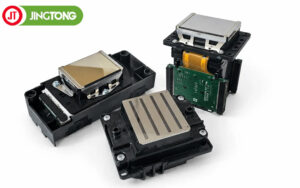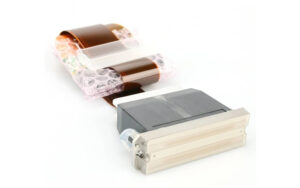
Kyocera printhead disassembly requires an understanding of the printhead’s internal structure, electrical components, and ink delivery channels. Kyocera industrial printheads use precision piezoelectric technology to eject ink droplets accurately at high frequencies. Understanding how these components work together can help users select compatible ink, troubleshoot printing problems, and maintain a stable ink supply.
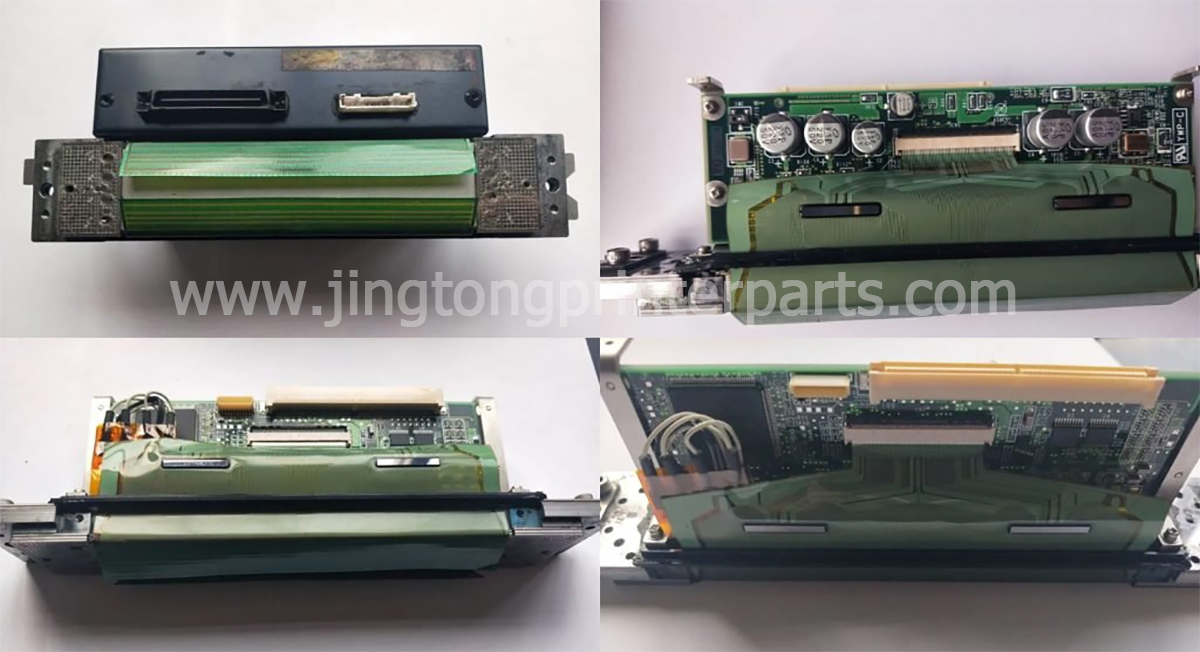
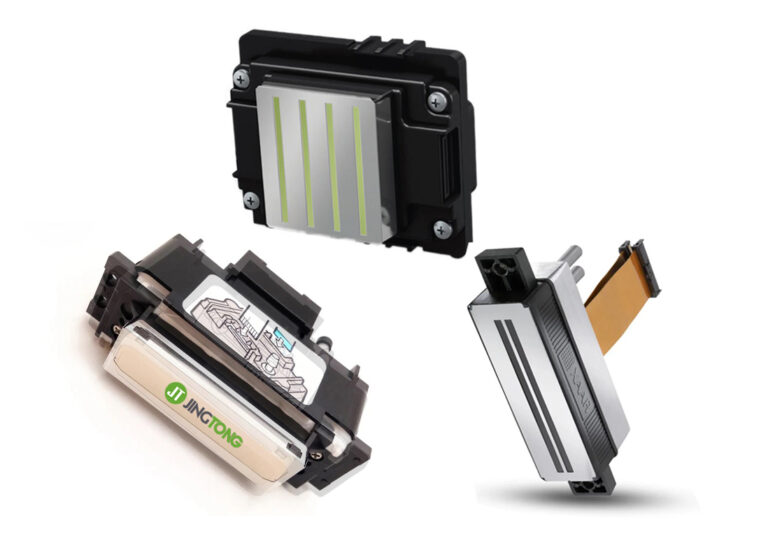
Kyocera KJ4A and KJ4B Printhead Series
The Kyocera KJ4A and KJ4B series are designed for different ink applications. KJ4A models are commonly associated with UV-curable and certain oil-based ink systems, while KJ4B models are designed for water-based applications, including selected textile and packaging printing systems.
Within each series, models may differ in drop volume, driving frequency, resolution, and application. For example, the KJ4B-0300 features a dual-channel configuration in which the two channels can be controlled independently. Other KJ4B versions are designed for different combinations of printing speed and resolution.
These differences matter when selecting a replacement printhead. Always confirm the complete model number, supported ink type, and printer configuration before purchasing or installing a head.
Internal Structure of a Kyocera Printhead
A Kyocera printhead contains an internal circuit module, piezoelectric actuators, ink channels, and a precision nozzle structure. Each component contributes to the accurate timing and delivery of ink droplets.
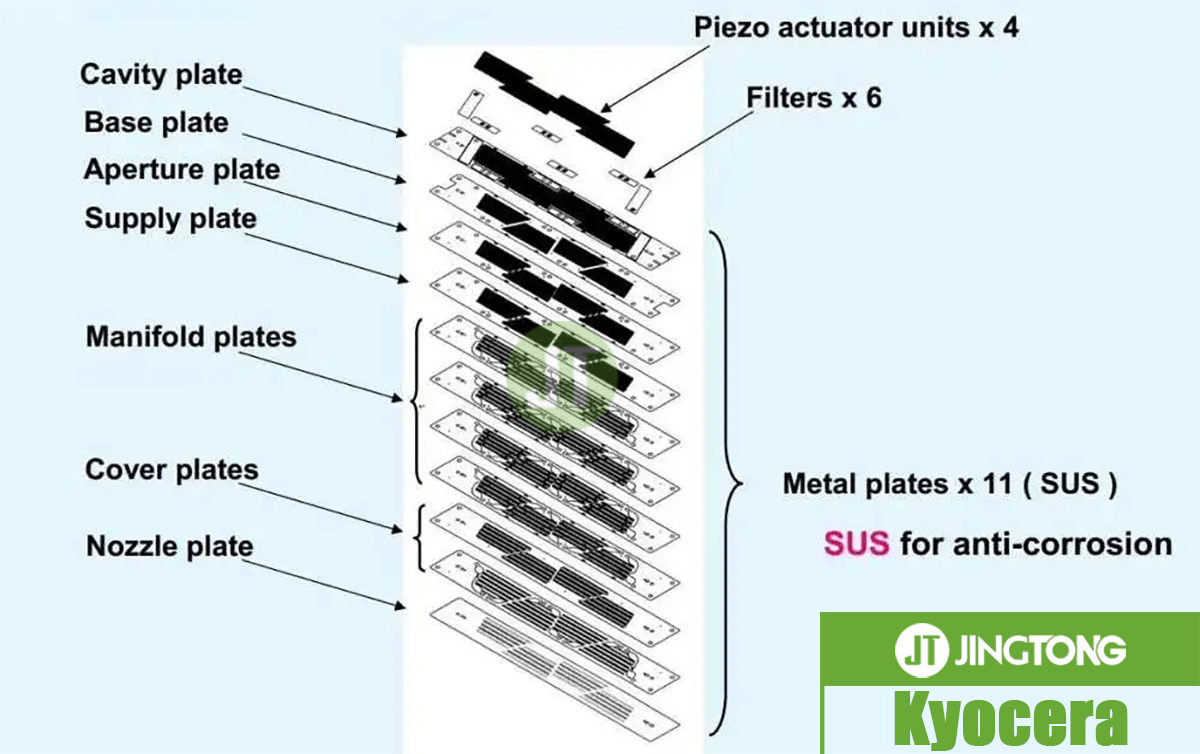
The reference article describes an 11-layer nozzle-sheet structure. Ink must pass through extremely fine internal passages before reaching the nozzle openings. This multilayer design supports precise ink delivery but also places high demands on ink cleanliness and manufacturing accuracy.
Particles, sediment, or dried ink can restrict these narrow channels and affect nozzle performance. Proper filtration before ink enters the printhead is therefore essential. Suitable filters help reduce contamination risks and support consistent ink flow.
Because the internal structure is highly precise, dismantling the head without appropriate tools and service information can damage components or compromise sealing.
How the Kyocera Ink Supply System Works
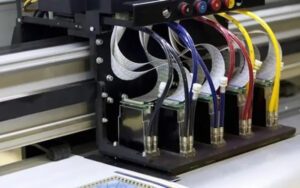
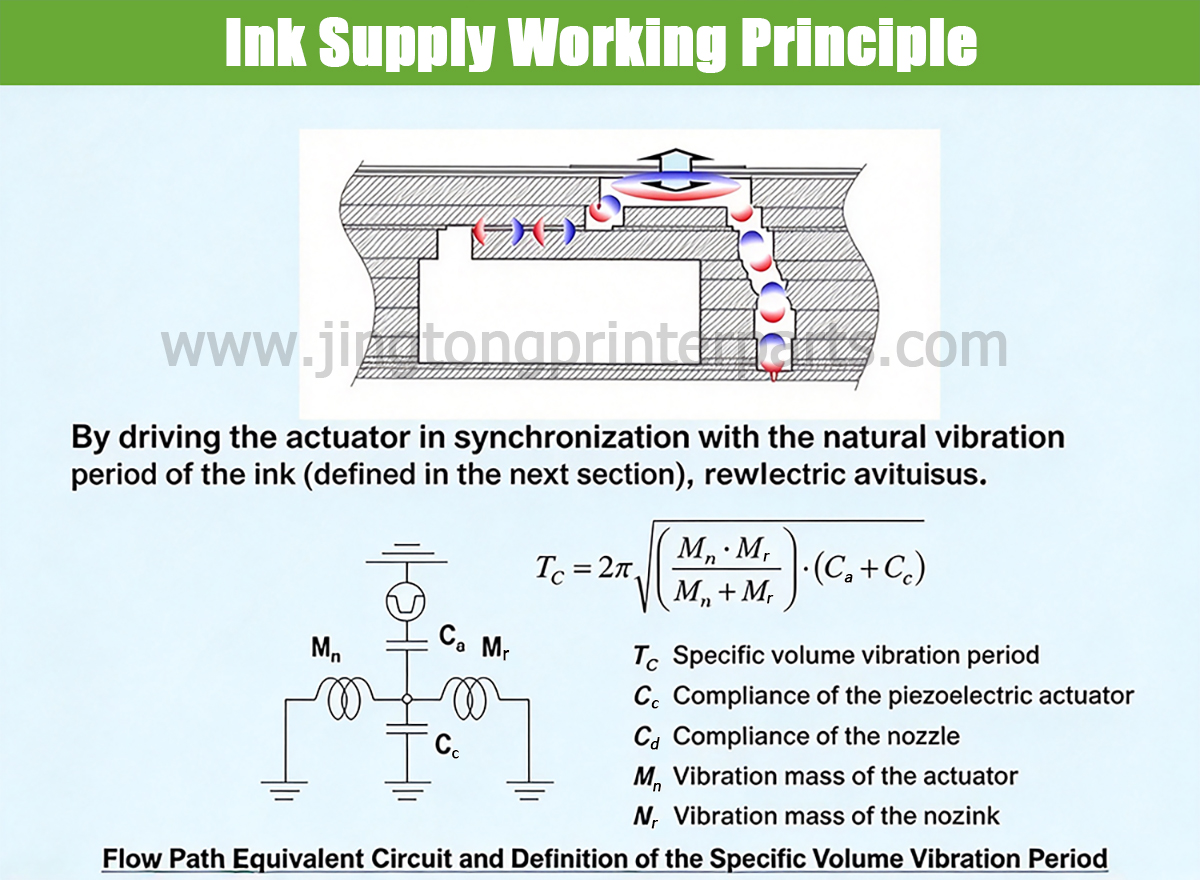
Ink enters the printhead through its supply channel and moves through internal grooves toward the ink chambers. In configurations that support circulation, ink may flow through designated inlet and return paths. The exact flow arrangement depends on the printhead model and the printer’s ink system.
Small channels connect the main ink passages to the chambers beneath the piezoelectric elements. When the printhead receives a driving signal, the piezoelectric element bends according to the applied waveform, changing the chamber pressure and forcing a droplet through the nozzle.
The process depends on coordinated control of the electrical waveform, ink properties, and supply pressure. If ink flow becomes unstable or air enters the system, droplet formation may become inconsistent even when the printhead itself is functioning correctly.
Why Ink Compatibility and Filtration Matter
Kyocera printheads require ink that meets the specifications of the particular model. Viscosity, surface tension, temperature, and particle content can all influence ink delivery and jetting stability.
Using unsuitable ink may cause unstable droplets, poor flow, or nozzle blockage. Filters must also be appropriate for the ink formulation and the printer’s required flow rate. A poorly matched filter can restrict ink delivery rather than improve it.
Do not assume that KJ4A and KJ4B printheads can use the same ink or cleaning fluid. Verify compatibility with the manufacturer’s documentation before changing consumables.
Important Considerations During Disassembly
Before considering internal disassembly, inspect the external ink supply system, including filters, tubing, connectors, pressure controls, and electrical connections. Run a nozzle test and follow the printer’s approved cleaning procedure to determine whether the problem can be resolved without opening the head.
Internal disassembly should be performed only by qualified technicians with model-specific service instructions. The nozzle structure and internal seals are sensitive, and incorrect handling may cause permanent damage or leakage.
Conclusion
The Kyocera printhead working principle relies on precision nozzle structures, piezoelectric actuation, and a stable ink supply. Understanding these elements helps operators make informed decisions about compatibility, filtration, and maintenance. Accurate diagnosis and proper handling are essential for protecting printhead performance and avoiding unnecessary replacement costs.